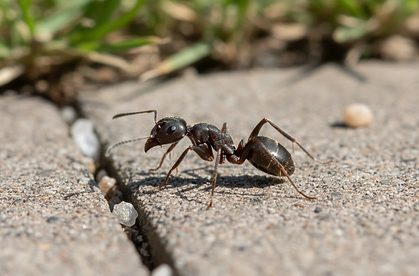
Ant Control in Devon & Cornwall – Local, Affordable & Effective
Ant Removel Devon & Cornwall for Kitchens, Gardens & Indoor Areas
Our local and affordable ant control service covers homes and businesses across Devon and Cornwall, offering fast and effective treatments to stop ant activity indoors and outdoors. We carry out a thorough inspection, identify the source of the problem, and apply targeted treatments that provide long-lasting results. Whether ants are appearing in your kitchen, garden, or commercial premises, we deliver reliable ant control backed by local expertise and trusted by customers throughout Devon and Cornwall.
Ants Are More Than Just a Nuisance
Structural Damage Risk
While garden ants usually nest in soil, nests under patios and driveways can displace large amounts of earth, potentially undermining paving and blockwork in your Devon or Cornwall garden.
Food Contamination
Foraging workers track pheromones and bacteria across floors and countertops, contaminating open food sources and kitchen preparation areas in your home or business.
Supporting Aphids
Ants "farm" aphids for their sugary honeydew, actively protecting these pests. High ant activity often leads to increased, damaging aphid infestations on your prized garden plants.
The Dartmoor Pest Control Difference
Life Cycle
Like all ants, the garden ant has a life cycle of complete metamorphosis (egg, larva, pupa, adult):
-
Eggs: Tiny, white, and oval-shaped.
-
Larvae: White, legless, and grub-like.
-
Pupae: Encased in a silken, light-brown cocoon, often called "ants' eggs" when found.
-
Adults: The colony produces workers (sterile females), queens (fertile females), and males.
The Nuisance Factor (Why They Enter Homes)
Garden ants are primarily a nuisance because they enter homes seeking food, especially sweet foods.
-
Pheromone Trails: Once a foraging worker finds a food source (like spilled juice or crumbs), it lays down a chemical pheromone trail, attracting hundreds of other workers from the nest to the food source, leading to the familiar trail of ants marching into a kitchen.
-
Nesting Under Paving: Their outdoor nesting habits can undermine paving slabs, patios, and block paving, sometimes causing instability.
-
"Flying Ants Day": A notable event, usually in July or August, where new winged queens and males emerge simultaneously from multiple colonies for mating flights. This often results in thousands of ants swarming for a short period.
Our Ant Inspection and Treatment Process
Effective control usually requires treating the entire colony, not just the foraging workers seen indoors:
-
Ant Baits: The most common and effective method, where workers take poisoned food back to the nest to kill the queen and larvae.
-
Insecticides: Application directly to outdoor nest entrances and along points of entry into the home.
-
Exclusion: Sealing entry points like cracks in foundation, gaps around windows, and door frames to prevent indoor access.
1
We don't just spray; we identify the ant species (usually the common Black Garden Ant) and locate the main nest entry points, which is key to long-term control.
Expert Identification
2
We use professional-grade gel baits and non-repellent insecticides that the workers carry back to the nest, eliminating the Queen and the colony at the source, safely away from pets and children.
Targeted, Safe Treatments
3
As a local business, we know the soil types and common infestation areas across the South West, giving us a unique advantage over national chains.
Devon & Cornwall Coverage