

Flies: The Cluster Fly
The cluster fly is a nuisance pest for homeowners. It does not bite people, carry diseases, no cause any real damage to a home. Cluster flies are about five-sixteenths of an inch long; they are gray with golden-toned hairs on their thorax. Spotting them is easy because they are usually all clustered together on walls outside, sunning themselves. This is also where their name comes from, because when resting they usually will be clustered near each other. The cluster flies are similar to many other pests as they just want to get inside houses to stay warm. With this in mind, the winter time is when people will most often find cluster flies inside their homes.

Cluster Flies Control in Devon & Cornwall
Cluster Flies Removel Devon & Cornwall
🪰 The Life Cycle of a Cluster Fly (Pollenia rudis)

Cluster flies typically have three to four generations per year. Their life cycle speeds up in warmer months and can take approximately 25 to 30 days to complete, assuming suitable environmental conditions and host availability.
1. Egg Stage
Location: The female fly lays her eggs individually in cracks in the soil or under decaying leaves.
Quantity: A single female can lay hundreds of eggs over her lifetime.
Appearance: The eggs are tiny, white, and elongated.
Duration: Hatching usually occurs within 2 to 3 days, though this can be longer in cooler temperatures.
2. Larval Stage (The Parasitic Stage)
Host Seeking: This is the most critical and unique stage. Once hatched, the small, cream-colored larva (maggot) immediately begins to actively search for its primary host: an earthworm (usually species in the Eisenia or Lumbricus genera).
Infection: Upon finding a host, the larva penetrates the earthworm's body wall and develops as an internal parasite.
Development: The larva feeds inside the living earthworm for about 13 to 22 days, developing through three instars (molting stages). The worm is eventually killed by the fully developed larva.
3. Pupal Stage
Formation: After the larva is fully grown
and has consumed the earthworm, it leaves the host's remains and pupates in the surrounding soil.
Appearance: The pupa is a hardened, dark brown, barrel-shaped casing called a puparium.
Duration: This quiescent stage lasts for approximately 8 to 11 days. The adult fly develops inside the
puparium.
4. Adult Stage
Emergence: The adult fly emerges from the puparium, crawls out of the soil, and begins to seek a
mate.
Appearance: Cluster flies are slightly
larger and darker than house flies, and they have characteristic yellow or golden hairs (setae) on
their thorax.
Behavior (The "Clustering"): This is where the fly gets its name. In the late summer or early
autumn, when temperatures drop, the adult flies
seek shelter to overwinter. They often
aggregate ("cluster") in large numbers inside the walls, attics, or ceiling voids of structures, where
they enter a state of diapause (hibernation).
Spring Activity: The overwintering adults become active again in the spring, leave the structure, a
nd the females begin laying eggs to start the cycle a new.

Cluster fly on you windows in Devon

The primary reason you see them buzzing at the window is that they are trying to get back outside.
Waking Up:
Cluster flies enter your home in the late autumn to hibernate (overwinter) in dark, quiet, protected spaces like attics, wall voids, and under eaves.
Triggered by Warmth: On sunny days during the winter, or when your central heating is on, the area where they are hiding warms up. This warmth "wakes them up" from their dormant state.
Drawn to Light: Once active, they have a natural instinct called positive phototaxis, meaning they are irresistibly drawn to light. Windows are the largest source of light inside your home, so the flies that emerge from the wall voids and ceiling gaps immediately fly toward the glass, mistaking it for a clear exit to the outdoors
Windows and the sunny sides of a building play a key role in their initial entry:
Initial Entry: In the autumn, cluster flies land on the warm, sunny sides of a structure (usually the south and west-facing walls) to bask in the heat.
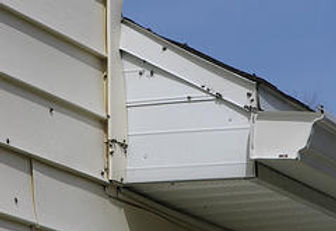
Finding Shelter: As the sun goes down and temperatures drop, they crawl upward and look for any small crack, gap, or crevice around window frames, fascia boards, roof eaves, or vents to squeeze into for the winter shelter.
Window Gaps: Gaps around window frames are one of their most common entry points, which is why they are often the first place you see them inside when they wake up.
Cluster fly inside your home in Devon & Cornwall
In order to get inside homes, cluster flies search for any small openings outside that will get them into the house. Also when windows or doors are open, that becomes a great entry opportunity for the cluster flies. Cluster flies will start entering homes in the fall, as the weather begins to cool down. By the winter most cluster flies will now be hibernating within a warm home. While hibernating the cluster fly is not very active, so a homeowner might not even know they are there. Although there are occasions where the cluster flies will come out in the day to sun themselves. Even though the cluster flies are in a warm house, they still enjoy sunning themselves in actual sunlight. If homeowners were to spot them it would be near the windows of the home; otherwise they pretty much stay in their hibernation spots.
The areas of a home that the cluster flies like to hibernate in are the attics and wall voids. The cluster fly is also known as an attic fly because that is their most popular spot to be found. Cluster flies also like to be higher up, hence the attic as a popular hibernation spot. Many times people may spot them in their attics because they all clustered together once they are in there. Seeing a big blackish looking spot in your attic might be frightening, but it is probably just cluster flies once you look up close. Once spring starts to turn the cluster flies will leave the house and venture back outside.
Once outside again they will mate and eat, neither of which they do during hibernation.
Now that spring is here and the cluster flies are back outside mating will begin. The cluster flies reproduce very frequently.
The females do not have to do much; all they do is mate then they lay the eggs. The eggs are laid in soil near earthworms. About three days later the eggs will hatch and the larvae will migrate towards the earthworms, and then burrow inside of the earthworms. The rest of the development is done inside the earthworm using it as a food source. Once fully developed the cluster fly will be on its own. This cycle will continue from the spring to the summer. During this time up to four generations or more can be made. As summer comes to an end and fall approaches the cluster flies will have to look for another home, or the same home, to hibernate in.


Questions & Answers
Q: Are adult cluster flies harmful to people or pets?
A: No. Adult cluster flies do not bite, sting, or spread disease; they are considered a nuisance rather than a health threat.